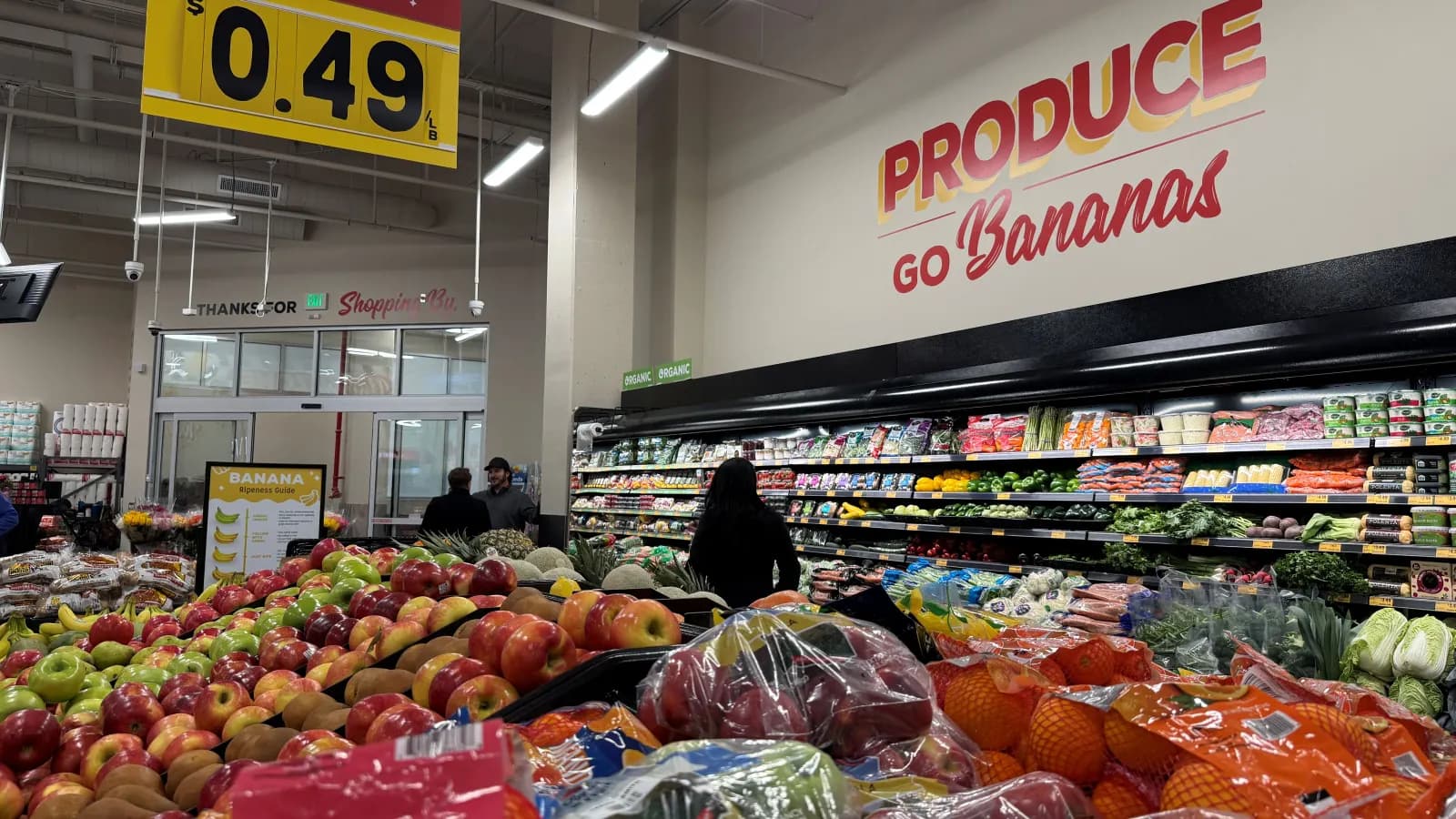
Grocery Outlet reported first-quarter net sales of $1.17 billion, up 3.6% year over year, but the company's comparable-store sales declined just over 1%, according to earnings disclosed May 14, 2026. The results landed in line with company guidance, yet CEO Jason Potter told investors the retailer remains dissatisfied with its overall performance.
The disconnect between top-line growth and comp-store decline reflects a key tension: transaction count rose 2%, but average transaction size fell 3%. Potter attributed the lag to timing. "It takes time for value messaging and consistent store experiences to translate to more loyalty and bigger baskets," he said during the earnings call.
Weekly traffic improved throughout the quarter, growing 2% to 5% year over year in March alone. The company invested in event-driven promotions tied to occasions like the Super Bowl and Easter to bolster traffic and comp-store performance, and sharpened its value positioning through improved sourcing and product visibility.
Potter called improved in-store experience a "huge opportunity." The company completed 34 store remodels in Q1 and plans roughly 100 by the end of 2026, a reduction from the initially planned 150. Grocery Outlet also wrapped up the closure of 36 stores announced in March, which Potter said will strengthen the earnings profile over time.
The company plans a tighter approach to new store growth, using more rigorous real-estate underwriting and selectivity on site acquisition. Potter said Grocery Outlet possesses "meaningful strengths" and a "highly relevant value proposition" but must focus on translating those into more consistent performance across the chain.
Despite progress on value messaging and product sourcing, Potter was candid about the work ahead. "While we're encouraged by the progress we're beginning to see, we're not satisfied with our current level of performance and are focused on the work we have in front of us," he told investors.