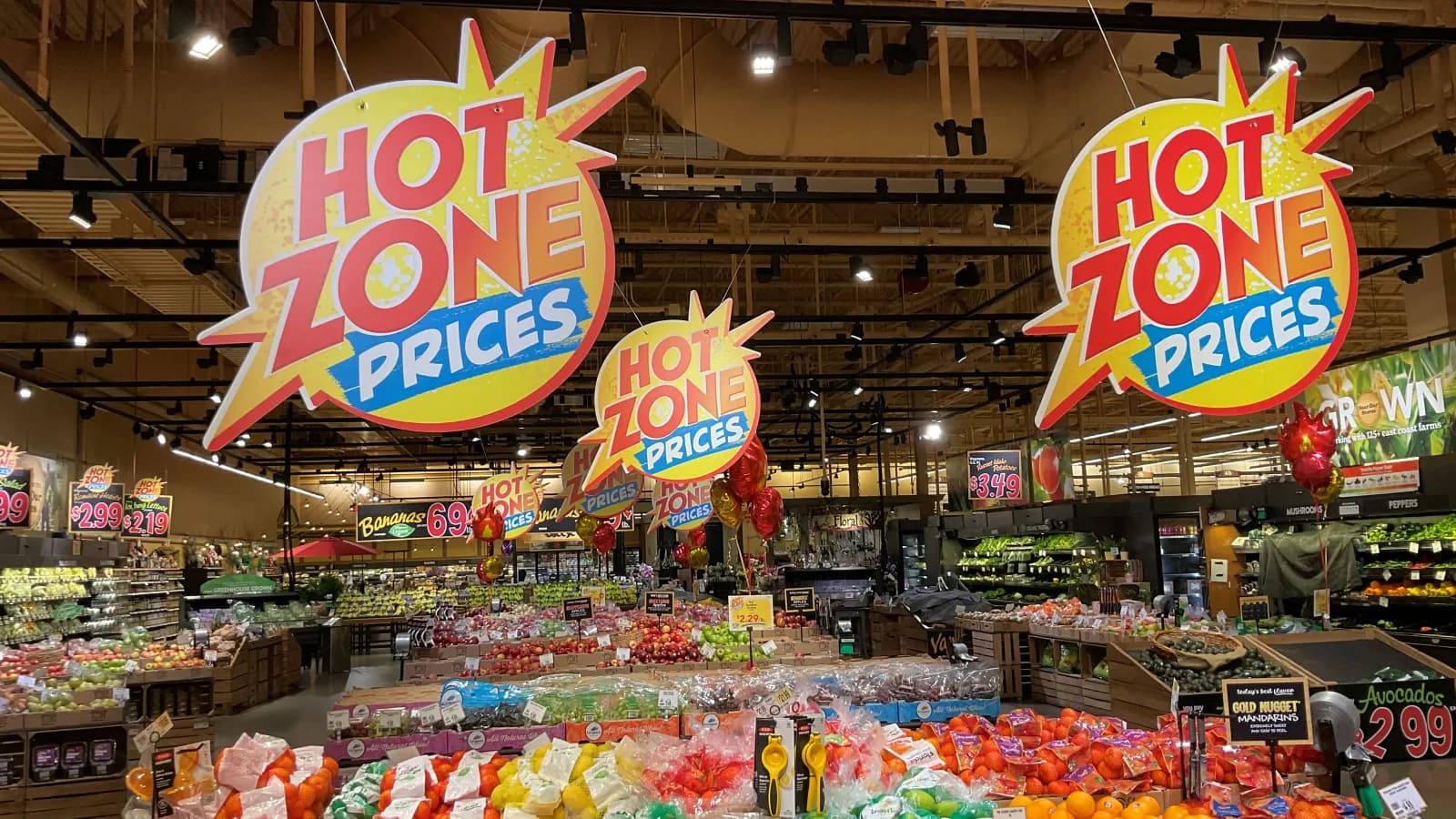
A shift is underway in how consumers respond to pressure on their budgets. Rather than hunt for discounts at their current supermarket, shoppers are increasingly moving to lower-priced retailers altogether.
A survey by consulting firm Alvarez & Marsal of 2,100 consumers found that 42% plan to switch to a less expensive grocer this spring, up from 31% who said the same about their fall shopping plans last year. By contrast, only 35% plan to switch to less expensive brands at their current store, down from 49% the previous year.
The numbers suggest consumers have hit a wall with traditional grocer promotions. They want lower prices, but they don't believe conventional chains like Kroger and Publix deliver them despite aggressive marketing. 27% plan to buy the same brands they currently buy, but at a less expensive store, up from 16% a year earlier.
The value perception gap
Low-price retailers have moved beyond just being cheaper. Research by Collage Group, a firm that measures brand "cultural fluency," found that Amazon, Walmart and Costco are leading the pack in cultural relevance, while Kroger and Publix are "trailing brands". The difference comes down to identity. Discounters own the value story. Traditional grocers still have to prove it.
Over the past decade, Walmart, Aldi and Costco have invested heavily in store formats and digital shopping while conventional grocers mostly continued operating as before. Aldi and Trader Joe's in particular have built devoted customer bases hungry not just for deals but for limited-time merchandise drops and a sense of discovery.
Quality and service are no longer differentiators
Traditional grocers banking on superior freshness and selection are defending positions that have eroded. More than two-thirds of shoppers surveyed by Alvarez & Marsal said that low-price grocers offer a selection that's as good as what traditional grocers offer. 63% said low-price grocers offer customer service that's as helpful as traditional grocers'.
Evidence of the shift shows up in retailer rankings. The 2026 Retailer Preference Index by Dunnhumby placed Aldi, Costco, Market Basket and Woodman's Market in the top 5 spots, with H-E-B as the sole conventional grocer in that tier.
The risk of permanent defection
The research suggests that switching behavior may be sticky. Low-price grocers are increasingly viewed as viable alternatives to traditional grocers with switching behavior more likely to stick the longer consumers pursue these options with favorable experiences. Once shoppers leave, they may not return even when economic pressure eases.
The urgency is showing in C-suite moves. Kroger recently named a company outsider as CEO, signaling pressure to reshape how the company operates. Fixing the value gap will require more than better marketing. It will demand operational changes, cost discipline and a hard look at what shoppers actually need from their grocery store.