India's largest FMCG makers are scrambling to offset a fresh wave of cost inflation triggered by geopolitical disruption in global supply chains. Crude-linked raw materials, packaging inputs and freight expenses have all spiked sharply as the Iran war ripples through manufacturing and logistics.
Polymers and specialty resins used in packaging have jumped 60 to 70 percent since the start of the Iran war, according to sector executives. With packaging accounting for 15 to 20 percent of total manufacturing expenses for daily essentials, the spike is hitting margin across portfolios.
Price hikes and pack cuts taking shape
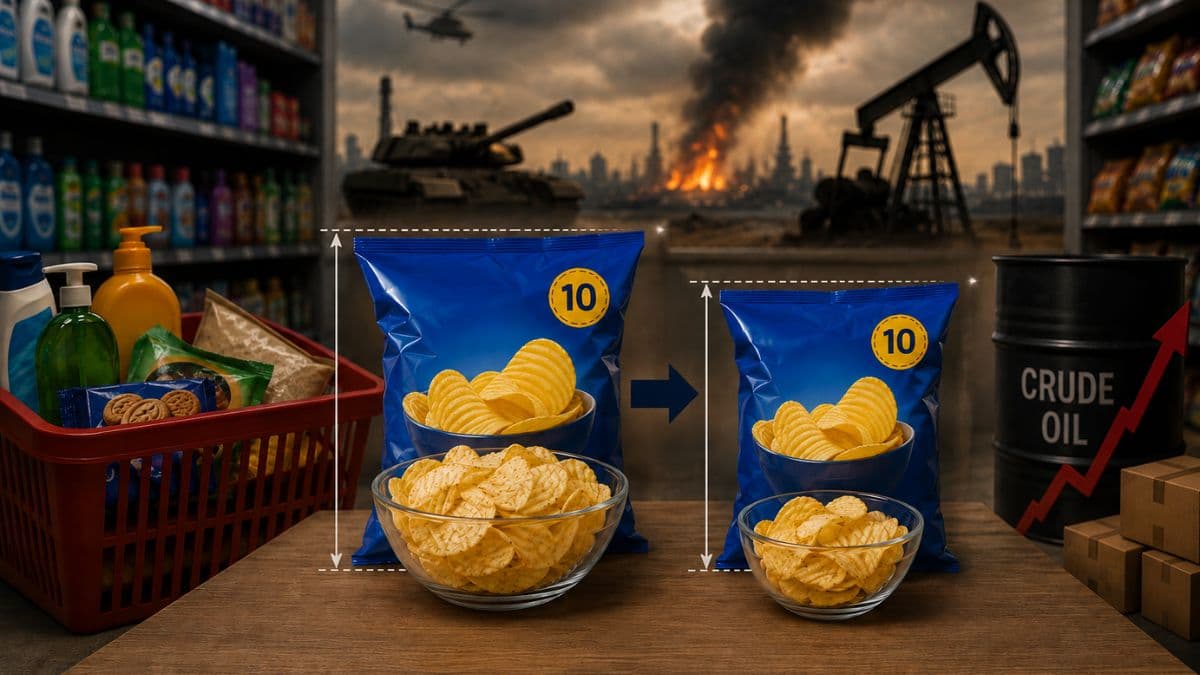
Dabur has announced a 4 percent price increase across different parts of the business to mitigate 10 percent inflation it is seeing across most portfolios, barring home and personal care and healthcare. Britannia is taking selective price increases in the June quarter, combining grammage adjustments and price rises on packs above Rs 10.
GCPL moved faster, raising soap prices by 5 percent in April, detergent prices by 6 to 7 percent, and household insecticide prices by 4 to 5 percent. The company has acknowledged that margins could face 100 to 250 basis points of pressure in certain segments over the next two quarters if elevated oil prices persist.
Supply chain reshuffling
Some companies are rerouting production to reduce exposure to disrupted shipping lanes. Britannia is shifting export manufacturing from Oman to India to reduce dependence on the Strait of Hormuz, where war has disrupted shipments. Beverage makers are evaluating lightweight packaging to reduce PET and glass usage. Others are increasing local sourcing to reduce dependence on volatile international supply chains.
The demand headwind
The pricing challenge arrives as rural and urban demand remain uneven. Rural consumption has improved gradually, but purchasing behaviour stays cautious. Urban consumers continue to spend selectively, favouring smaller packs and discounts in mass categories while premium products perform relatively better.
This tightrope mirrors industry experience from 2022, when Russian-Ukraine war inflation forced multiple price hikes that weakened volume growth as consumers cut back purchases or switched to cheaper regional alternatives. That memory is shaping pricing strategy again.