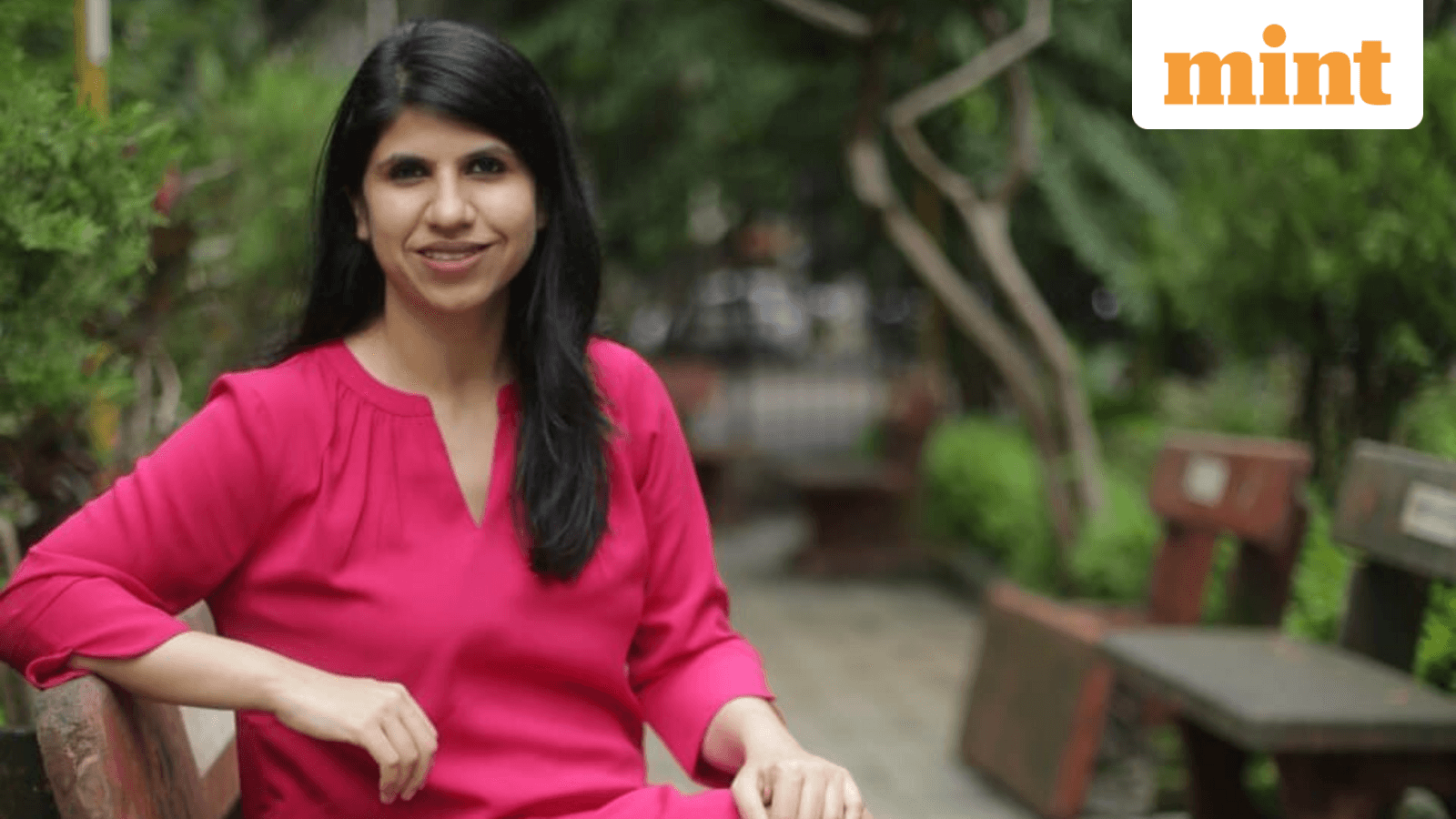
Oziva's path to acquisition by Hindustan Unilever Ltd (HUL) in February 2026 was neither linear nor typical. Founded by Aarti Gill and her husband Mihir Gadani, the plant-based supplement startup went from struggling to secure a 10 lakh rupee bank loan to being acquired for roughly 1,680 crore rupees, with HUL buying the remaining 49 percent stake for 824 crore rupees after an initial 51 percent purchase in December 2022 for about 264 crore rupees.
The journey reveals lessons about building consumer health brands in India that diverge sharply from venture-backed tech playbooks. Gill and Gadani started with a digital wellness platform in 2013, but found consumers were not ready for video-based health consultations. They pivoted to creating supplements when existing products did not meet their standards, officially launching Oziva in 2016.
Category creation through slow growth
The company did not scale like a typical venture startup. Growth came through years of educating consumers on protein, nutrition and preventive wellness. When Oziva hit plateaus, the founders made hard choices. By 2021, the company had reached 80 crore rupees in annual revenue, but once pandemic-driven immunity demand cooled, growth flatted.
The founders realized that single-category focus limited growth in India. Unlike the US market, where brands can dominate a narrow segment, India demanded broader portfolios. Oziva expanded to roughly 70 to 80 products across wellness segments, but the complexity became unmanageable. The company then cut dozens of low-performing products and narrowed focus. By exit, 95 percent of revenue came from nutrition products that consumers used repeatedly.
Capital discipline and the cost of excess funding
Gill now reflects that Oziva may have raised more capital than necessary. Consumer health brands compound slowly through trust and habit, not fast-burning campaigns. Venture funding comes with exit pressure within five to eight years, a misaligned timeline for businesses that need a 10 to 15-year horizon.
Early on, the founders visited more than 30 bank branches seeking loans and were rejected repeatedly before State Bank of India lent them 10 lakh rupees. That constraint forced disciplined growth. The company scaled to roughly 25 crore rupees in revenue without significant institutional equity capital.
Why HUL acquired Oziva
By the time HUL acquired Oziva, growth was no longer constrained by demand or brand trust, but by distribution depth and operational leverage. HUL was sharpening its focus on health and wellness under then chairman Sanjiv Mehta, building a thesis around preventive health and better-for-you products. For the founders, HUL offered distribution scale and the ability to serve consumers beyond the digitally native audience.
Oziva faced competition from digital-first brands including Cosmix (over 50 crore rupees turnover in FY25), Kapiva (342 crore rupees revenue in FY25) and Wellbeing Nutrition (170 crore rupees revenue in FY25), as well as direct-selling giants Amway Nutrilite and Herbalife.
Oziva was still in the red in fiscal year 2025, but losses had narrowed sharply to 4 crore rupees. The acquisition reflects a shift in India's FMCG industry where wellness has moved from niche to mainstream.
What's next
Gill and Gadani exited the company fully following the buyout. They have since set up Giga Capital to back young startups, and Gill is exploring a new venture in the health domain at a larger scale.
The acquisition underscores a broader pattern: as D2C wellness brands mature beyond early-stage distribution constraints, large FMCG players acquire them to tap into consumer demand for preventive health and functional nutrition while protecting their own turf.