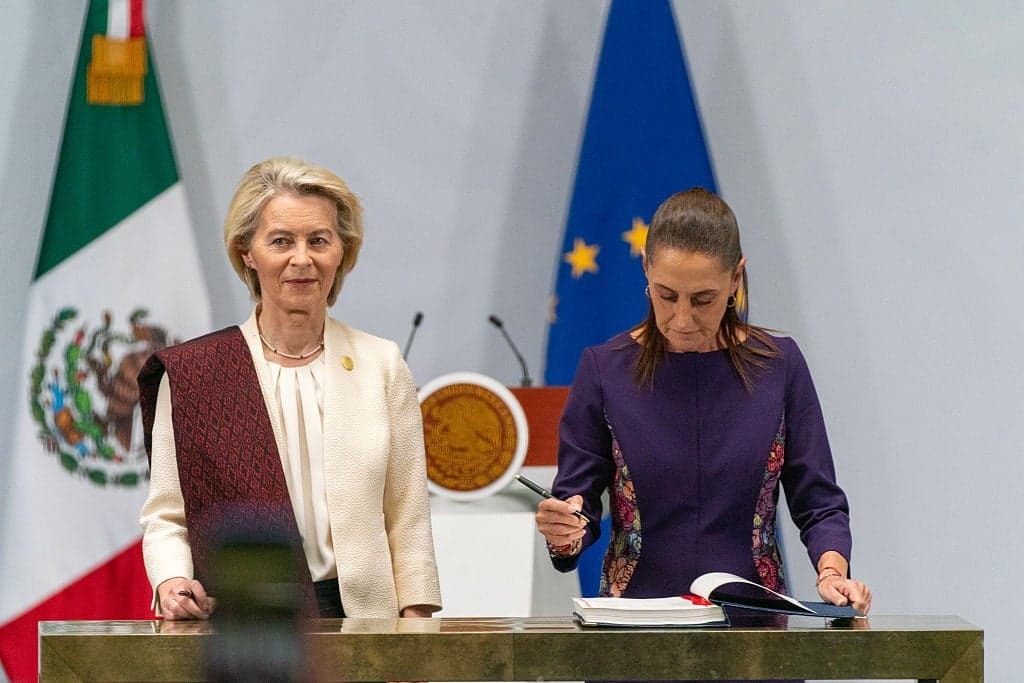
The European Union and Mexico have signed a modernised trade agreement that eliminates import duties on a broad range of food and beverage products, marking a significant milestone in EU-Mexico commerce after talks that began in 2016.
Zero tariffs on EU food exports
Under the Modernised Global Agreement (MGA) and interim Trade Agreement (iTA), the EU will apply zero tariffs on exports of dairy products, poultry, pork, confectionery, pasta and wine to Mexico. The agreement removes previously high tariff rates: poultry duties of up to 100% now become zero, pork tariffs of up to 45% are eliminated, and beef tariffs of up to 30% are removed on volumes up to 30,000 tonnes. Chocolate, confectionery and pasta, formerly charged at up to 20%, will now enter duty-free.
Dairy shipments face the largest tariff cuts. EU yogurt currently taxed at 20% will now enter at zero rate, while blue cheeses and other cheeses currently taxed at up to 45% will now enjoy zero rates for a maximum quota of 20,000 tonnes. Wine duties of up to 100% are also eliminated.
Scale of EU-Mexico food trade
Annual food and drink exports from the EU to Mexico amounted to €2.5bn ($2.9bn) last year, making Mexico the bloc's second-largest importer of its agri-food products in Latin America. Within that total, EU dairy shipments to Mexico were worth €175m, vegetables €253m, and wine and wine-based products €211m.
Protected geographical indications
The EU and Mexico will protect 232 spirits and an additional 336 European geographical indications on wines, beers and food, including iconic products such as Parma ham, Rioja wine and Roquefort cheese.
Broader scope and ratification
Mexico will protect 232 spirits and see tariffs eliminated on 86% of agricultural goods under the deal, while also experiencing eased rules of origin particularly in the automotive, aerospace, and chemicals sectors. The MGA now needs to be ratified by the EU member states, while the iTA requires consent of the European Parliament and European Council. Mexico will follow its own internal procedures for ratification.
Climate and investment pledges
Alongside the trade deal, the EU and Mexico signed a joint declaration on a circular economy aimed at addressing climate change, biodiversity loss and pollution, including plastic pollution. The two sides also concluded a Global Gateway Investment Agenda partnership in which the EU will support more than €5bn of investment in sustainable transport, health and pharmaceuticals, water and sanitation, sustainable agriculture, forests and biodiversity.